
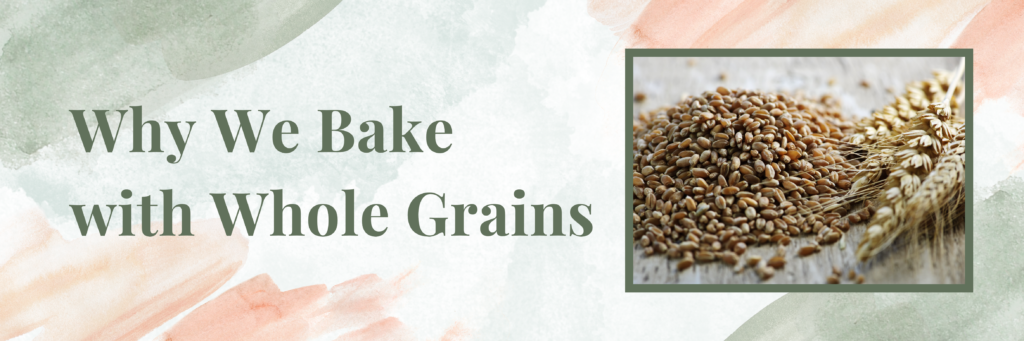
Whole grains have been part of traditional baking for centuries, long before they became a trend in recent years. On the Hillside, we choose whole grains because they bring depth of flavor, texture, and a sense of grounding to our baking.
Whole grains contain the full grain kernel (bran, germ, endosperm), which means nothing has been stripped away. When baked thoughtfully, they create breads and pastries that feel satisfying and balanced, without needing excess sugar or complicated ingredients.
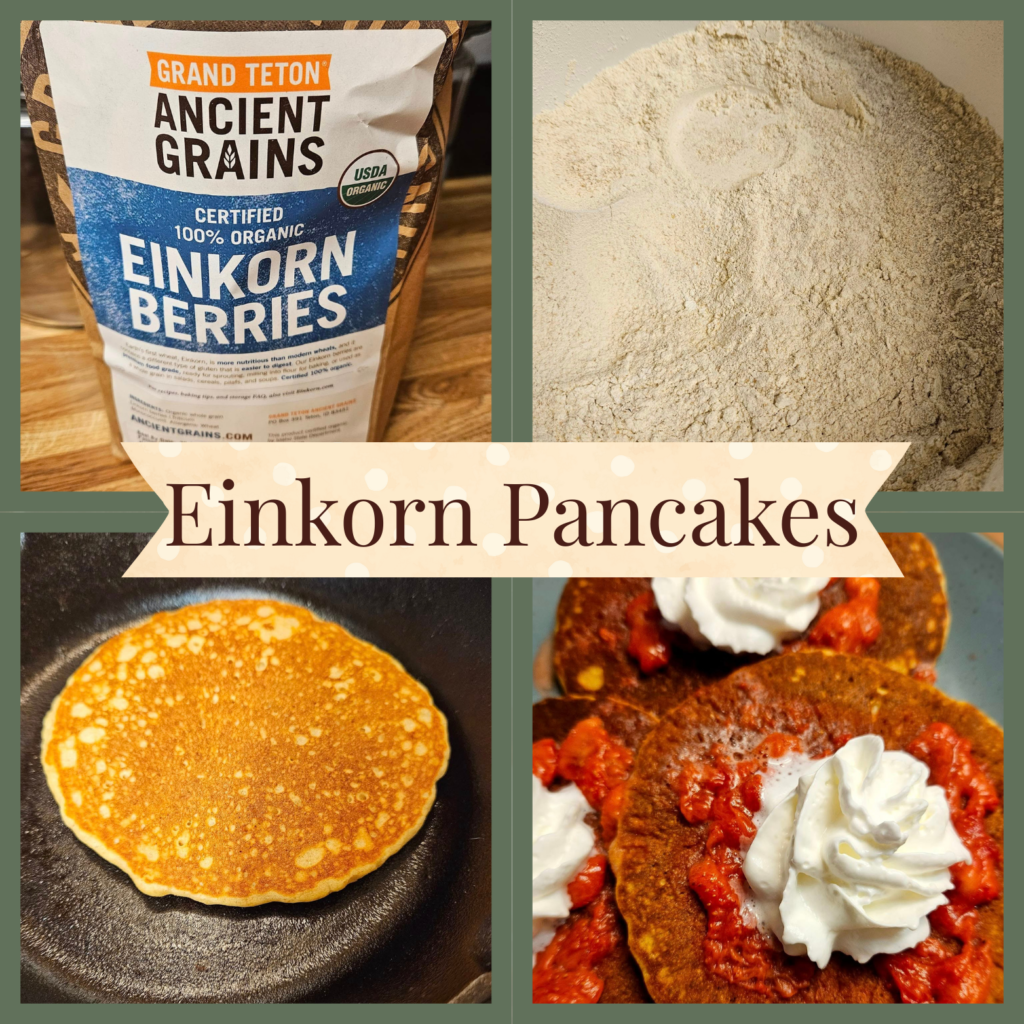
We love experimenting with different grains depending on the season, hearty wheat and rye in cooler months, lighter flours blended in during spring and summer. Baking this way allows us to work with nature rather than against it.
No grain mill? No problem! There are many whole grains you can start incorporating into your weekly meal plan right away. Give these a try:
- Quinoa – add to salads, side dishes, or our favorite – pumpkin power porridge
- Millet – this gluten-free grain is perfect for veggie bowls
- Wild Rice, Brown Rice, Brown Jasmine Rice, Brown Basmati – an easy swap for white rice
- Sprouted, whole grain Oatmeal – try steel-cut Irish oats
- Amaranth – what can’t amaranth do? It’s beautiful in the garden, the greens are similar to spinach, and the grain can be milled, added to salads, or even popped like popcorn.
If you’re new to whole-grains, start small. Even swapping a portion of refined flour for whole grain can change both flavor and texture in beautiful ways.
This post is shared for educational purposes and reflects our approach to baking and natural living